
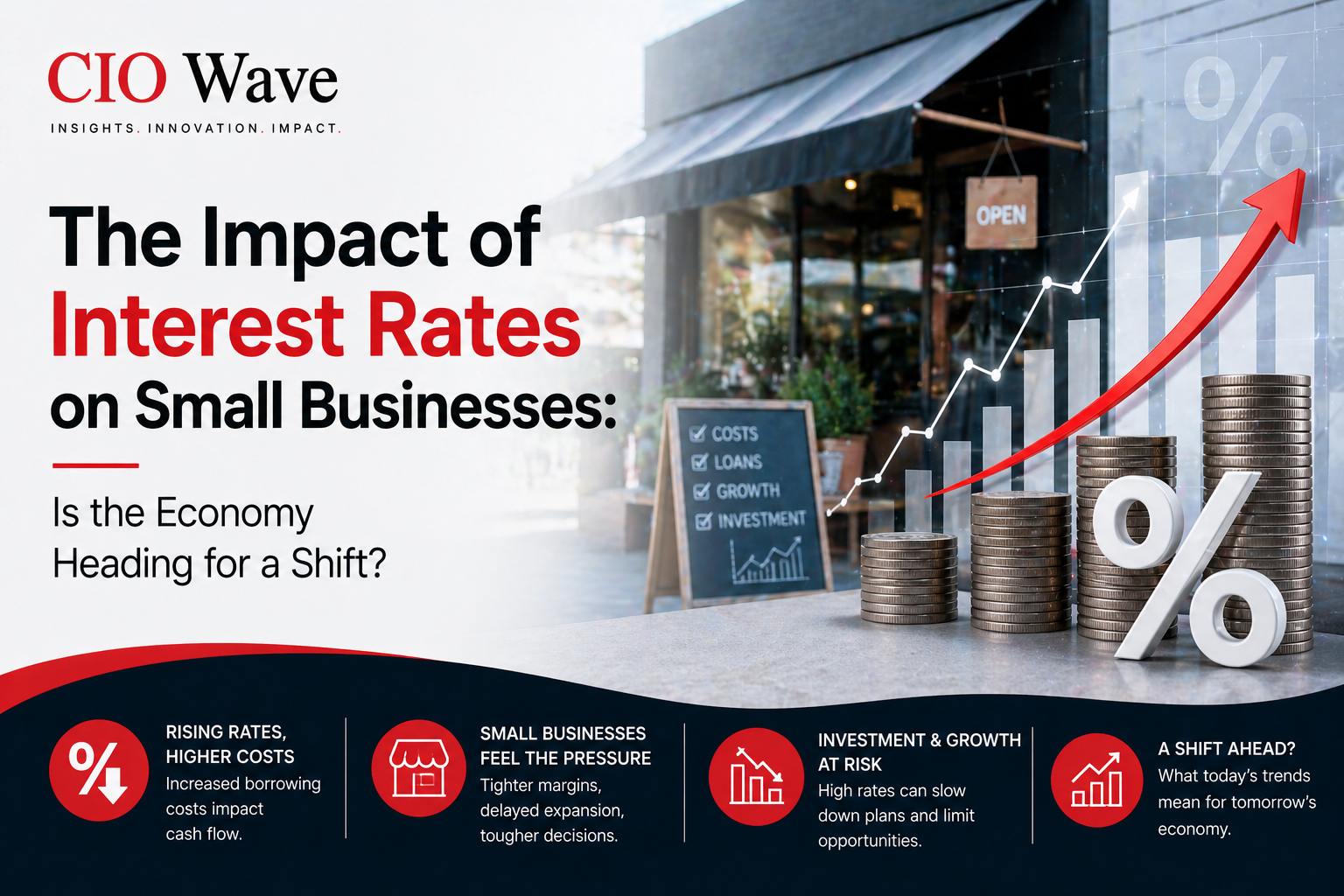
Interest rates are a powerful economic lever—one that can either stimulate growth or slow down inflation. For small businesses, these fluctuations are not just theoretical changes in monetary policy—they have real, immediate, and sometimes severe consequences. As central banks around the world adjust rates to respond to inflation, economic uncertainty, or geopolitical risks, small businesses find themselves at the center of this economic tug-of-war. But are we on the verge of a broader economic shift? And what do current trends mean for small business owners?
Interest rates, typically set by a country’s central bank, determine how expensive it is to borrow money. When rates are low, borrowing is cheaper, encouraging investment, expansion, and consumer spending. Conversely, high interest rates make borrowing more expensive, which can cool off an overheating economy but also dampen business activity.
Small businesses often rely on external financing to maintain operations, purchase inventory, or invest in growth. Unlike large corporations, they usually don’t have access to capital markets or large cash reserves. As interest rates rise:
Loan repayments increase, cutting into profits.
Access to new capital tightens, especially for startups or those with weaker credit profiles.
Customer spending may decline, especially on non-essential goods and services, affecting revenue.
In the wake of the COVID-19 pandemic, governments slashed interest rates to near-zero levels to stimulate growth. Many small businesses thrived in this low-rate environment, taking advantage of cheap loans and strong consumer demand. However, as inflation surged, central banks responded with aggressive rate hikes.
For small businesses already burdened by pandemic-related debt, the rising cost of servicing these loans has become a significant challenge. Some are now forced to cut staff, reduce investment, or in extreme cases, shutter operations.
Banks and other financial institutions, wary of default risks in a high-rate environment, are becoming more selective. Small businesses, especially those in riskier sectors like retail, hospitality, or real estate, are facing increased scrutiny. This trend may continue even if rates stabilize, prolonging the credit squeeze.
High interest rates also influence consumer behavior. Mortgage rates, credit card interest, and personal loans all become more expensive. As households tighten their budgets, demand for goods and services declines. Small businesses, particularly those dependent on discretionary spending, are feeling the pinch.
The impact of rising rates is not isolated to small businesses. Signs of economic cooling—reduced job growth, declining consumer confidence, and slowing investment suggest a broader shift may be underway. While the goal is often to control inflation, the side effects can resemble the early stages of a recession.
Whether this becomes a full-blown economic downturn depends on several factors: how quickly inflation responds, how long interest rates stay elevated, and whether governments introduce support measures.
To navigate this environment, small businesses can consider:
Refinancing existing debt while rates are still manageable.
Improving cash flow management by closely monitoring receivables and payables.
Diversifying revenue streams to reduce dependence on any one market or customer base.
Investing in efficiency, such as automation or digital tools, to reduce costs in the long run.
While challenging, high-interest-rate environments can also present opportunities. Businesses that manage their finances well and maintain agility may gain market share as competitors falter. Additionally, sectors like financial services, energy efficiency, and discount retail often perform well during economic slowdowns.
Interest rates are more than just an economic indicator—they are a lifeline or a liability for small businesses. As rates continue to fluctuate, small business owners must stay informed, flexible, and proactive. Whether the economy is heading for a major shift or a soft landing, one thing is clear: those who adapt quickly will be best positioned to survive and even thrive in the new landscape.