
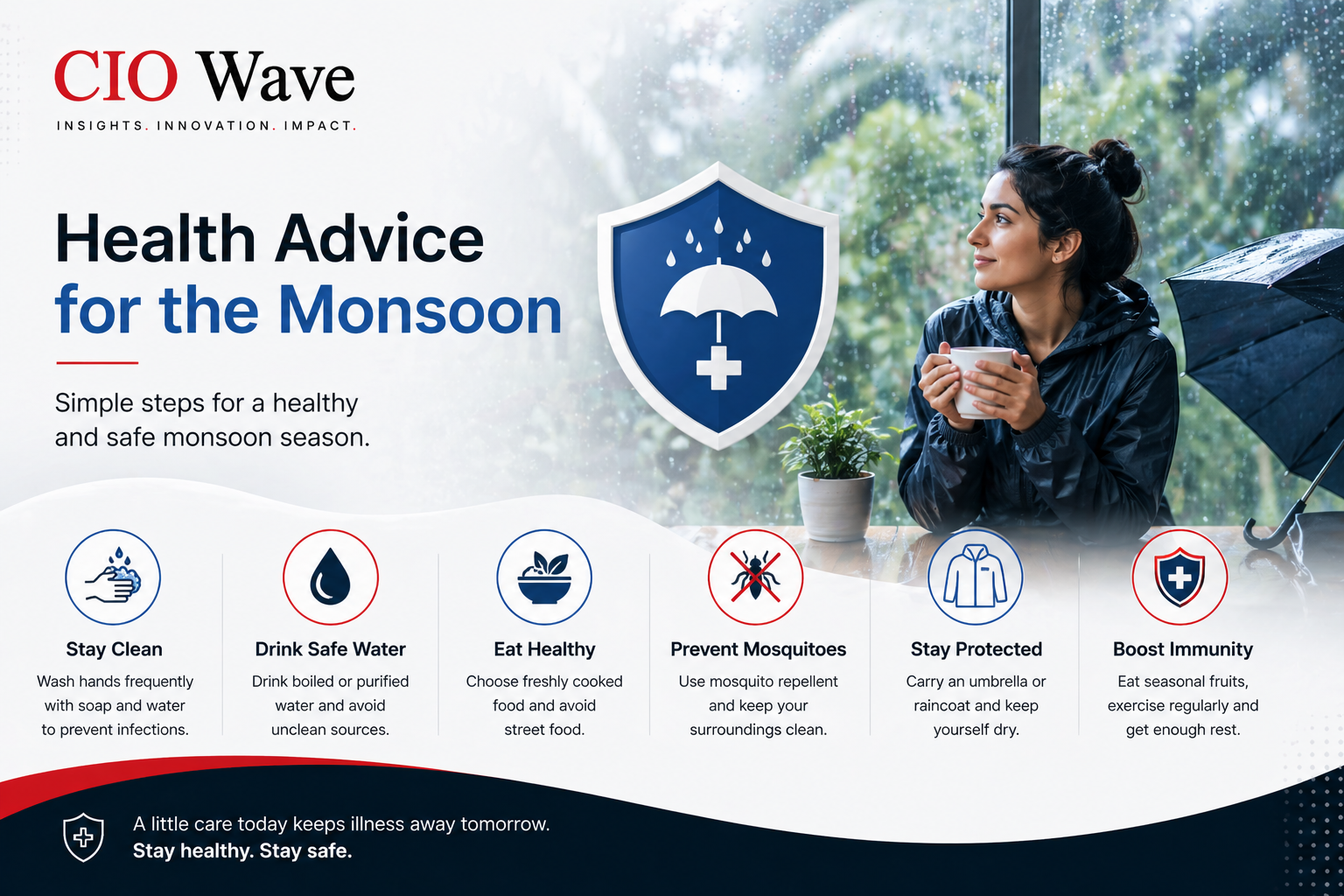
Health Advice for the Monsoon: Ways to Remain Well
This Monsoon
Seasonal
illnesses start to appear along with the monsoon's beauty. If precautions are
not taken seriously, the monsoon season can be harmful to your health,
resulting in foodborne illnesses, waterborne infections, and viral fever.
Maintaining your health throughout the monsoon season is not difficult, but it
does require awareness, consistency, and some consideration for your behavior.
Here are some tips for maximizing the benefits of the monsoon season and
maintaining your best possible physical and mental health.
Consume Fresh Food and Be Safe
There is a rise
in gastrointestinal illnesses, food poisoning, and digestive issues during this
time since food and water are most contaminated. Steer clear of roadside
vendors' cut fruits, uncooked street food, and anything that has been left out
for hours. Eat hot meal that is prepared at home. Freshly prepared dals,
steaming veggies, and soups not only satisfy your stomach but also strengthen
your immune system.
Insects and soil diseases are more prevalent during the monsoon season, but
otherwise leafy greens are safe to eat. If you do include them, make sure to
fully wash and boil them. Because their peels cover them, oranges, bananas, and
apples are safer.
Use Caution While Drinking
During the
monsoon season, having clean water is essential. The primary source of diseases
during this period is drinking tainted water, especially in places where there
is flooding or standing water. Make it a habit to drink boiled or filtered
water even at home. If you're going out, bring a water bottle so you don't have
to use strange sources. Ice and icy drinks made from unfiltered water should
not be consumed since they may contain dangerous bacteria.
Boost Your Immunity
During the
monsoon, everyone's immunity is at its lowest, especially due to the sudden
drop in temperature and humidity. A well-balanced diet high in antioxidants,
zinc, and vitamin C will also boost your immunity. Including spices like
turmeric, black pepper, ginger, and garlic in your food can also help you stay
healthy. These spices' inherent antibacterial and anti-inflammatory properties
make them perfect for monsoon cookery.
Additionally, soothing and protecting are teas prepared with tulsi, ginger, and
cinnamon. They soothe your breathing and digestion and warm you up. Drinking
lots of warm liquids to stay hydrated is another simple and effective strategy
to stay healthy.
Keep Your Skin Safe
You must change
your clothes immediately if you become wet when walking outside in the rain.
Areas like the foot, armpits, and gaps between the toes that are susceptible to
rashes and fungal infections should receive special attention.
Use antifungal or mild pharmaceutical powder to avoid infection if you have to
wear shoes for long periods of time. Even though wearing open shoes is normally
preferable, if your shoes get wet, make sure they are completely dry before
putting them on again.
Remain active indoors.
Your morning
runs or walks outside may be interrupted by the monsoon, but that shouldn't
deter you from staying active. You may maintain your flexibility and immune
system strength with at-home exercises, yoga, or stretching. Long periods of
sitting make you drowsy and slow down your metabolism, which is the last thing
you want during a season that is already known for its lack of energy.
Even if you spend the day indoors or at home, try to switch positions at least
once per hour. Additionally, exercise improves your attitude and keeps the
monsoon blues at bay.
Protect Yourself from Mosquitoes
Rainy weather causes
an exponential rise in mosquito-borne diseases like dengue fever, malaria, and
chikungunya. A breeding ground is the accumulation of water in pots, coolers,
and open containers. Make sure your surroundings are dry and clean, and don't
let any water stand still for more than a day. If you are going out in the
evening, cover your arms and legs with clothing and use mosquito nets or
repellents, especially at twilight.
Attending to Mental Health
Shorter days,
overcast skies, and more time spent indoors than usual can all have an impact
on your mental health. Others may become lethargic, have fatigue, or even
experience seasonal depression. Make sure your house is warm and bright to
combat this. Your mood can be improved by reading, writing in a journal, sipping
tea, listening to music, or sitting in front of a window.
Engaging in social interactions via phone calls, texts, or in-person meetings
when possible can also improve your mood and eliminate the feelings of
loneliness that rainy days can bring.
Keep Your Environment Clean
Your home may
quickly become a haven for mold, fungi, and germs when water seeps through the
walls, furniture, and upholstery. When the sun comes out, open your rooms.
Clean your floors frequently, and remove any moisture-retaining mats, drapes,
and bed linens. You can protect your health by practicing basic hygiene, such
as washing your hands before eating, taking a bath when you get wet, and
changing your clothes all at once if you become wet.
Concluding remarks
While the monsoon season is a time for beauty, romance, and renewal, it also
calls for prudence and vigilance. You can enjoy everything that the rains have
to offer without being ill if you are careful about what you eat and drink,
what you wear, and how you maintain a clean environment. All it takes to stay
healthy during monsoon is a little planning, a little prevention, and a lot of
self-care.