
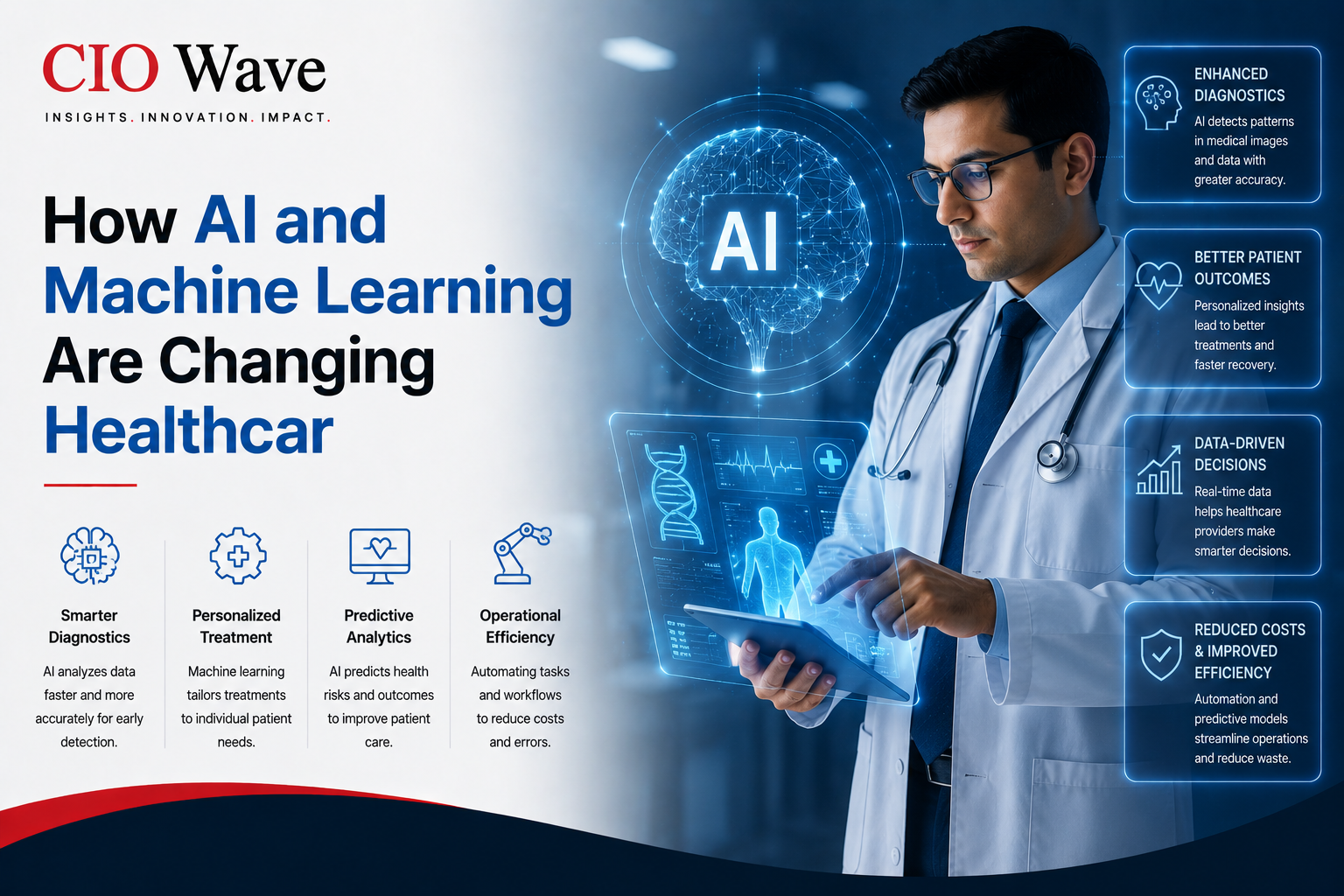
How AI and Machine Learning Are Changing Healthcare

How AI and Machine Learning Are Changing Healthcare

Artificial Intelligence (AI) and Machine Learning (ML) are making big changes in healthcare, helping doctors provide better and faster care. These technologies are improving how diseases are detected, making treatments more personalized, and even handling routine tasks more efficiently.

1. Finding Diseases Early

AI-powered tools can analyze medical tests like X-rays, MRIs, and CT scans faster and more accurately than humans. This helps doctors catch diseases early, leading to better treatment outcomes.

  • Medical Imaging: AI can scan medical images and spot problems like tumors or infections that doctors might miss. Google’s DeepMind, for example, can detect eye diseases just as well as human specialists.
  • Predicting Diseases: AI looks at a person’s medical history and genetics to predict their risk of developing conditions like cancer or diabetes, helping doctors take action before the disease gets worse.

2. Personalized Treatment

AI helps doctors create treatment plans that are customized for each patient instead of using a one-size-fits-all approach.

  • Cancer Treatment: AI can analyze medical studies and patient records to recommend the best chemotherapy drugs for a particular patient. IBM Watson is already doing this for cancer patients.
  • Chronic Disease Management: AI-powered apps track conditions like diabetes or heart disease and give real-time advice to help patients manage their health better.

3. Virtual Health Assistants and Chatbots

AI-driven chatbots and virtual assistants are making healthcare more accessible by providing quick information and support.

  • Symptom Checkers: Apps like Buoy Health and Ada Health analyze symptoms and suggest possible conditions, helping patients decide whether they need to see a doctor.
  • Medication Reminders: AI-powered assistants send reminders to help patients take their medicines on time.
  • Mental Health Support: AI chatbots like Woebot and Wysa provide emotional support and mental health exercises to those in need.

4. AI in Surgeries and Medical Procedures

AI is helping surgeons perform procedures more safely and accurately.

  • Robotic Surgery: The Da Vinci Surgical System helps surgeons perform delicate operations with better precision and control.
  • AI in Endoscopy: AI helps detect abnormalities in the digestive system, improving the accuracy of diagnoses.

5. Automating Administrative Tasks

AI is reducing the paperwork and routine tasks that doctors and nurses have to handle, allowing them to focus more on patient care.

  • Medical Transcription: AI tools like Nuance Dragon Medical can automatically convert doctor-patient conversations into written records.
  • Fraud Prevention: AI can detect false insurance claims, helping healthcare organizations save money.

6. Remote Healthcare and AI-Powered Monitoring

AI is making it easier for patients to receive care from home through telemedicine and wearable health devices.

  • Health Trackers: Devices like Apple Watch and Fitbit track heart rate, oxygen levels, and other health indicators, alerting users to potential health problems.
  • AI in Telemedicine: Platforms like Teladoc and Babylon Health use AI to assess symptoms and connect patients with doctors online.

Challenges and Concerns

While AI is improving healthcare, there are still challenges to overcome:

  • Data Privacy: Keeping patient information safe is a top priority. AI systems must follow strict regulations like HIPAA to protect personal data.
  • Bias in AI: If AI is trained on limited data, it may not work equally well for all patients. Developers need to ensure that AI is fair and unbiased.
  • AI Should Assist, Not Replace Doctors: AI should help doctors, not take over their jobs. Human oversight is important to ensure AI makes ethical and accurate decisions.

Final Thoughts

AI and machine learning are transforming healthcare by making diagnoses faster, treatments more personalized, and administrative work easier. While there are still challenges to address, the future of AI in healthcare looks promising. By working alongside doctors, AI can help create a healthcare system that is more efficient, affordable, and accessible to everyone.