
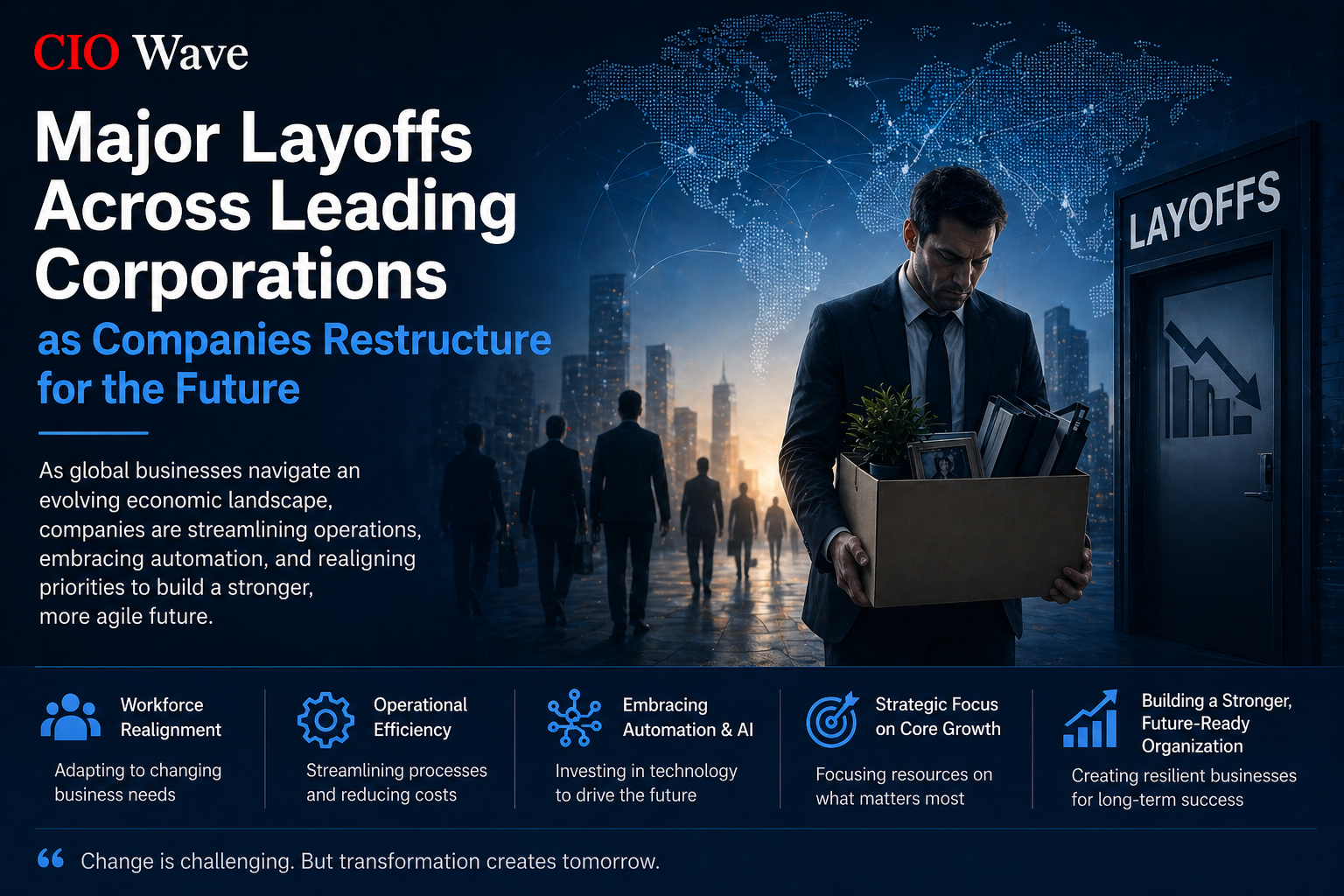
In a move that
has shaken the corporate world, several major companies have announced
large-scale layoffs as part of their ongoing restructuring efforts. Industry
giants, including Meta, Microsoft, and Starbucks, have
confirmed significant workforce reductions in response to shifting economic
conditions and the increasing need to streamline operations in a world that is
rapidly becoming more digital.
Meta’s Workforce Reduction: A Shift Toward Efficiency
Meta, the
parent company of Facebook, Instagram, and WhatsApp, has revealed plans to lay
off approximately 10,000 employees globally. This move comes as the
company seeks to restructure its operations to focus more on its core products
and services, while reducing its reliance on non-core divisions. The company’s
restructuring is particularly driven by the rising costs of maintaining its
sprawling workforce and the need to adjust its business model to meet shifting
consumer preferences in an increasingly competitive digital market.
Meta CEO Mark
Zuckerberg emphasized that the layoffs were part of a broader strategy to
enhance efficiency and refocus on long-term profitability. "We are
prioritizing areas where we can invest in the future, such as artificial
intelligence, machine learning, and virtual reality," Zuckerberg stated in
a company-wide email. He further noted that Meta’s pivot to the Metaverse,
which requires significant investment in new technologies, means that the
company must cut back on other, less profitable areas.
Microsoft Adjusts to Economic Pressures
Following in
Meta’s footsteps, Microsoft has announced that it will cut about 8,000
jobs as part of a significant restructuring effort aimed at navigating
economic pressures and accelerating its shift towards cloud computing and AI
solutions. Microsoft’s decision to lay off employees, especially in its
hardware and sales divisions, underscores the company's push to focus on
high-growth areas such as Azure cloud services, AI innovation,
and digital transformation solutions for businesses.
Satya Nadella, Microsoft’s CEO, acknowledged the
challenging economic environment, noting that the tech giant has had to make
difficult decisions to remain competitive in the fast-evolving tech landscape.
“We are responding to changing market conditions and recalibrating our focus on
the areas that offer the most growth potential,” he said in a recent earnings
call. The layoffs are expected to predominantly impact employees in non-core
areas of the business, with many jobs being moved to locations with lower
operating costs.
Starbucks Faces Challenges Amid Shifting Consumer
Behavior
Meanwhile, Starbucks
has also confirmed plans to lay off about 2,000 employees globally,
citing a need to adapt to changing consumer behavior in a post-pandemic world.
The coffeehouse chain has been grappling with an evolving landscape in which
customers are increasingly seeking convenience through digital ordering and
delivery options. Starbucks has responded by implementing more automation and
digital tools to enhance the customer experience, but this has unfortunately
led to the loss of certain in-store roles.
Laxman
Narasimhan, the new CEO
of Starbucks, emphasized that the company’s shift towards automation and
AI-driven customer service was essential to keeping up with consumer expectations.
“The digital transformation of our business is critical to ensuring we remain
competitive in a world where convenience and speed are paramount,” Narasimhan
said in a statement. As part of the restructuring, Starbucks plans to redeploy
affected workers into other roles, with an emphasis on upskilling employees for
emerging opportunities in digital and technology-driven positions.
Broader Implications for the Tech and Retail Sectors
The widespread
layoffs at Meta, Microsoft, and Starbucks signal a broader trend of corporate
restructuring across the tech and retail industries. Many companies are
focusing on efficiency, digital transformation, and cost optimization as
they adapt to rapidly changing economic conditions. The global economic
environment—characterized by inflationary pressures, rising labor costs, and
increasing competition—has forced businesses to reassess their growth
strategies and focus more intently on areas with the highest potential for
profitability.
The trend
towards automation and digitalization is also reshaping the labor
market. As companies invest more heavily in artificial intelligence, machine
learning, and cloud computing, certain job roles, particularly in traditional
retail and lower-skill tech positions, are becoming obsolete. However, new
roles requiring advanced skills in tech, data analysis, and digital services
are emerging, creating both challenges and opportunities for the workforce.
Labor unions and employee advocacy groups
have voiced concerns about the impact of these layoffs on workers, especially
as many of the affected employees have been with these companies for years.
Critics argue that the focus on efficiency and profitability is
coming at the expense of the workforce, raising questions about job security
and the long-term sustainability of such employment practices.
The Future of Employment in Tech and Retail
The recent wave
of layoffs in the tech and retail sectors serves as a stark reminder of how
quickly the business world can change. As companies continue to pivot
and focus on high-growth areas, workers in traditional roles may find
themselves out of a job or forced to adapt quickly to new skills.
However, some
experts believe that this period of restructuring could pave the way for a more
innovative and sustainable workforce in the future. Training and
reskilling initiatives are expected to be key to helping workers transition
into new roles within the digital economy. Companies that invest in the
long-term growth and well-being of their employees—through training programs,
career development, and supportive policies—may emerge stronger in the years
ahead.
As businesses
like Meta, Microsoft, and Starbucks redefine their strategies for the digital
age, the focus will likely shift toward finding a balance between technological
advancement and the human workforce. The future of work will
undoubtedly be shaped by how well companies manage this delicate balance
between efficiency and employee well-being.